
“The PLA expected Russia to run the same playbook it did with Crimea on a larger scale. And it didn’t work.”
[Editor’s Note: Today’s post welcomes back proclaimed Mad Scientist Dr. Howard Wang, who recently served as a subject matter expert on our Ukraine, the Middle East, and Proxy Wars around the Globe: Emergent Trends and Associated Implications for the Joint Force panel discussion during the T2COM G-2’s Mad Scientist / William and Mary Great Power Competition & Conflict in the Age of Authoritarian Collusion virtual event on 27 January 2026 — check out the top ten take-aways from this informative event here.
In this episode of The Convergence podcast, Dr. Wang explores how China’s observations of Russia’s protracted war in Ukraine have transformed their approach to contemporary conflict, challenging their long-held precept of “winning without fighting” and forcing the People’s Liberation Army’s (PLA’s) re-calibration of its hybrid warfare concept — with cognitive warfare now being harnessed to complement kinetic operations to achieve battlefield success. Dr. Wang also describes how the U.S. can harden itself against the PLA’s “systems destruction warfare” — Enjoy!]
[If the podcast dashboard is not rendering correctly for you, please click here to listen to the podcast.]
 Dr. Howard Wang is a political scientist at RAND. From 2024-2025, he was detailed to the Office of the Secretary of Defense as a China Policy Advisor to the Deputy Assistant Secretary of Defense for China, Taiwan, and Mongolia. Prior to RAND, he was a policy analyst for the U.S.-China Economic and Security Review Commission, where he researched U.S.-China military competition and deterrence in the Taiwan Strait.
Dr. Wang’s primary research interests include Chinese Communist Party (CCP) political decision-making and People’s Liberation Army (PLA) strategy and doctrine. He completed his Doctorate in International Affairs (DIA) at the Johns Hopkins School of Advanced International Studies, where he was awarded distinction for his thesis research on the CCP’s sea power strategy. Dr. Wang completed his Master’s in Public Policy at Georgetown University McCourt School of Public Policy and his bachelor’s degree at Boston University. Dr. Wang co-authored China’s Lessons from the Russia-Ukraine War: Perceived New Strategic Opportunities and an Emerging Model of Hybrid Warfare, RAND Report, 22 May 2025.
In our latest episode of The Convergence podcast, we sat down with Dr. Wang to discuss China’s approach to hybrid warfare, the implications of their “win without fighting” strategy, and what this means for the U.S. Army and Joint Force. The following bullet points highlight key insights from our conversation with him:
-
-
- Russia’s ongoing war in Ukraine led China’s PLA to shift its thoughts on hybrid warfare. Following Russia’s failed gambit to rapidly seize Ukraine in 2022, the PLA became more accepting of the idea that a confrontation with the U.S. may result in a large-scale conflict.
 Rather than abandoning their hybrid warfare concept, they adjusted it to incorporate a number of non-kinetic methods to help the PLA achieve kinetic success on the battlefield.
- Russia’s ongoing war in Ukraine led China’s PLA to shift its thoughts on hybrid warfare. Following Russia’s failed gambit to rapidly seize Ukraine in 2022, the PLA became more accepting of the idea that a confrontation with the U.S. may result in a large-scale conflict.
-
-
-
- The PLA is resigning itself to the idea that winning without fighting will fail, and believe that the U.S. may in fact instigate conflict in any confrontation over Taiwan, especially as China grows closer to power
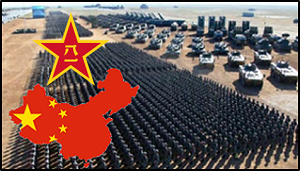 parity with the U.S. It is impossible to say whether the CCP will have the political will to engage in a protracted conflict with the U.S., but the PLA has been steadily preparing for it — with the CCP calling on the Chinese people to prepare for total war. The CCP has sharply stepped up this rhetoric, especially given Russia’s stalemated war of attrition in Ukraine.
- The PLA is resigning itself to the idea that winning without fighting will fail, and believe that the U.S. may in fact instigate conflict in any confrontation over Taiwan, especially as China grows closer to power
-
-
-
 The PLA will seek to use the Cognitive Domain to exploit seams in U.S.-Western alliances and partnerships and sow domestic discord across the U.S. The PLA will also employ cyberattacks to target U.S. Command and Control systems and deepfakes of U.S. Joint Force commanders giving fake orders to undermine unity of command. They may even seek to generate ethnic strife between the U.S. and its Allies and partners through its disinformation machine. The objective of these gray zone tactics is to disrupt U.S. Joint Force decision making at all levels and echelons, in the event of a conflict.
-
-
-
- The PLA has an inflated perception of Starlink’s capabilities and a worst-case mindset regarding its role the Space Domain. They believe, through Starlink’s modular payloads, that the U.S. has achieved real-time sensing, processing, and transmission of battlefield data — seamlessly integrating data links to achieve precise position, navigation, timing, and target surveillance. The PLA
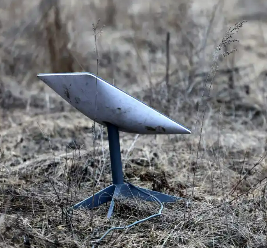 believes this satellite constellation provides the U.S. with one-way battlefield transparency — an asymmetric advantage. The PLA will likely adopt a comprehensive strategy to counter Starlink, including electronic warfare, cyber warfare, and anti-satellite lasers and microwaves.
- The PLA has an inflated perception of Starlink’s capabilities and a worst-case mindset regarding its role the Space Domain. They believe, through Starlink’s modular payloads, that the U.S. has achieved real-time sensing, processing, and transmission of battlefield data — seamlessly integrating data links to achieve precise position, navigation, timing, and target surveillance. The PLA
-
-
-
- While the PLA sees fewer opportunities to deter any future conflict with the U.S., this does not mean war is inevitable. Still, the U.S. can posture itself for any potential conflict with China by continuing to develop capabilities that harden us against the PLA’s “systems destruction warfare” — i.e., its ability to disrupt our understanding and perception of the battlespace, induce paralysis, neutralize our ability to function, and negate our ability to project power and wage warfare — by building redundant communications capabilities and procedures to combat disinformation across all echelons. Plans like the Partnership for Indo-Pacific Industrial Resilience (PIPIR) can also identify concrete opportunities that enhance combined lethality, leverage shared capabilities, and strengthen the defense industrial base amongst the U.S. and its Indo-Pacific Allies and partners, presenting a formidable challenge to China, should deterrence fail.
-
Stay tuned to the Mad Scientist Laboratory for future insightful episodes of The Convergence podcast!

If you enjoyed this post, check out the T2COM G-2‘s Operational Environment Enterprise web page, brimming with authoritative information on the Operational Environment and how our adversaries fight, including:
Our T2COM OE Threat Assessment 1.0, The Operational Environment 2024-2034: Large-Scale Combat Operations
Our China Landing Zone, full of information regarding our pacing challenge, including ATP 7-100.3, Chinese Tactics, T2COM OE Threat Assessment 1-1, How China Fights in Large-Scale Combat Operations, T2COM OE Threat Assessment 1-1.1, How China Fights Against a U.S. Army Brigade Combat Team, 10 Things You Didn’t Know About the PLA, and BiteSize China weekly topics.
Our Russia Landing Zone, including T2COM OE Threat Assessment 1-2, How Russia Fights in Large-Scale Combat Operations and the BiteSize Russia weekly topics. If you have a CAC, you’ll be especially interested in reviewing our weekly RUS-UKR Conflict Running Estimates and associated Narratives, capturing what we learned about the contemporary Russian way of war in Ukraine in 2022 and 2023 and the ramifications for U.S. Army modernization across DOTMLPF-P.
Our Iran Landing Zone, including the Iran Quick Reference Guide and the Iran Passive Defense Manual (both require a CAC to access).
Our North Korea Landing Zone, including Resources for Studying North Korea, Instruments of Chinese Military Influence in North Korea, and Instruments of Russian Military Influence in North Korea.
Our Irregular Threats Landing Zone, including TC 7-100.3, Irregular Opposing Forces, and ATP 3-37.2, Antiterrorism (requires a CAC to access).
Our Running Estimates SharePoint site (also requires a CAC to access) — documenting what we’re learning about the evolving OE (including Russia’s war in Ukraine war since 2024 and other ongoing competitions and conflicts around the globe). Contains our monthly OE Running Estimates, associated Narratives, and the quarterly OE Assessment Intelligence Posts.
… as well as previous Mad Scientist Laboratory content, exploring this aspect of the Operational Environment:
Challenging Reality: Chinese Cognitive Warfare and the Fight to Hack Your Brain, by Dr. John Ringquist
A Katechon for the Cognitive Domain, by proclaimed Mad Scientist Kevin Williamson
In the Cognitive War – The Weapon is You! by Dr. Zac Rogers
An Intelligentized PLA: A FICINT Scenario for INDO-PACOM, by proclaimed Mad Scientist Dr. James Giordano
AI as a Propaganda Accelerant, by Aldrin Yashko
Influence at Machine Speed: The Coming of AI-Powered Propaganda by MAJ Chris Telley
The Exploitation of our Biases through Improved Technology, by Raechel Melling
Damnatio Memoriae through AI and What is the Threshold? Assessing Kinetic Responses to Cyber-Attacks, by proclaimed Mad Scientist Marie Murphy
China and Russia: Achieving Decision Dominance and Information Advantage, by Ian Sullivan
Information Advantage Contribution to Operational Success, by CW4 Charles Davis
Gaming Information Dominance and Russia-Ukraine Conflict: Sign Post to the Future (Part 1) by Kate Kilgore
Sub-threshold Maneuver and the Flanking of U.S. National Security and Is Ours a Nation at War? U.S. National Security in an Evolved — and Evolving — Operational Environment, by Dr. Russell Glenn
The Erosion of National Will – Implications for the Future Strategist, by Dr. Nick Marsella
A House Divided: Microtargeting and the next Great American Threat, by 1LT Carlin Keally
Weaponized Information: What We’ve Learned So Far…, Insights from the Mad Scientist Weaponized Information Series of Virtual Events, and all of this series’ associated videos
Weaponized Information: One Possible Vignette and Three Best Information Warfare Vignettes
LikeWar — The Weaponization of Social Media
The Death of Authenticity: New Era Information Warfare
Active Defense: Shaping the Threat Environment and The Information Disruption Industry and the Operational Environment of the Future, by proclaimed Mad Scientist Vincent H. O’Neil , as well as his associated video presentation from 20 May 2020, part of the Mad Scientist Weaponized Information Series of Virtual Events.
Non-Kinetic War, Global Entanglement and Multi-Reality Warfare and associated podcast, with COL Stefan Banach (USA-Ret.)
Disclaimer: The views expressed in this blog post do not necessarily reflect those of the U.S. Department of War, Department of the Army, or the U.S. Army Transformation and Training Command (T2COM).