
[Editor’s Note: Today’s guest post submission is by Kunal Chauhan — recent William & Mary graduate and new T2COM G-2 Analyst. In his second Mad Scientist Laboratory submission, he introduces the concept of using directed energy weapons in close air support. The post begins with a quick vignette to describe a future scenario where high-energy lasers and high-powered microwaves target enemy drones and vehicles. — Read on!]
A surrounded U.S. infantry company is bombarded by enemy armored vehicles and drones. They call in close air support from Army rotary aircraft in the area — standard protocol. In conjunction with their cannons, Hellfire missiles, and rockets, Apache helicopters fly in with counter-drone laser capability. In a matter of seconds, enemy drones are fried in flight, including those trying to take out the support aircraft. Additionally, U.S. aircraft now have microwave technologies, which indiscriminately fire, rendering enemy electronics and vehicles useless.
Directed energy in close air support (CAS) is a relatively abstract concept that seems like it is straight out of Star Wars. It’s not TIE fighters supporting Imperial ground units, as much as it is support aircraft frying electronic systems with a microwave or laser — not blaster bolts, but continuous beams of light. This concept of putting Directed Energy Weapons (DEW) like High-Energy Lasers (HEL) or High-Powered Microwaves (HPM) is something that is technically viable, though it does come with large risks, as well as large engineering challenges.

There have already been successful uses of DEW for Counter Unmanned Aerial Systems (cUAS) purposes — in June 2017, U.S. Special Operations Command was able to successfully test an HEL system on an AH-64 Apache, shooting down a drone — with those examples being potentially scalable for mass use. CAS, however, requires that HEL or HPM are used to take out not just drones, but enemy positions and armored vehicles. But can something like an HEL do the same job as a Hellfire missile or 30-millimeter cannon?
A number of issues arise, mainly focused on stability, energy, and safety of the CAS unit. HEL systems require a direct, uninterrupted stream of energy onto a target — something that can be easily disrupted on a highly mobile CAS unit, especially one which may need to perform evasive maneuvers to avoid enemy anti-aircraft fire. The system, therefore, has to establish a level of stability to create direct contact for multiple seconds, which can be difficult. CAS usually requires achieved air superiority, but in this case, even man portable anti-air systems would have to be almost non-existent. Thermal blooming also plays in here — a concept where a laser beam is distorted as it heats up the air around it — sometimes leading to a weaker beam. This means that if the HEL is firing in the exact same path multiple times, its damage potential could decrease.

HELs require a large amount of energy, especially for a beam that must penetrate armored vehicles rather than just unarmored small drones. A significant energy unit designated for the HEL would need to be added to a CAS asset, decreasing the asset’s payload capacity simply due to weight restrictions. Heat is also an issue, with the system having the potential to overheat from the high energy produced, requiring a thermal management system while adding increased weight. Both of these issues could compromise the safety of the CAS asset.
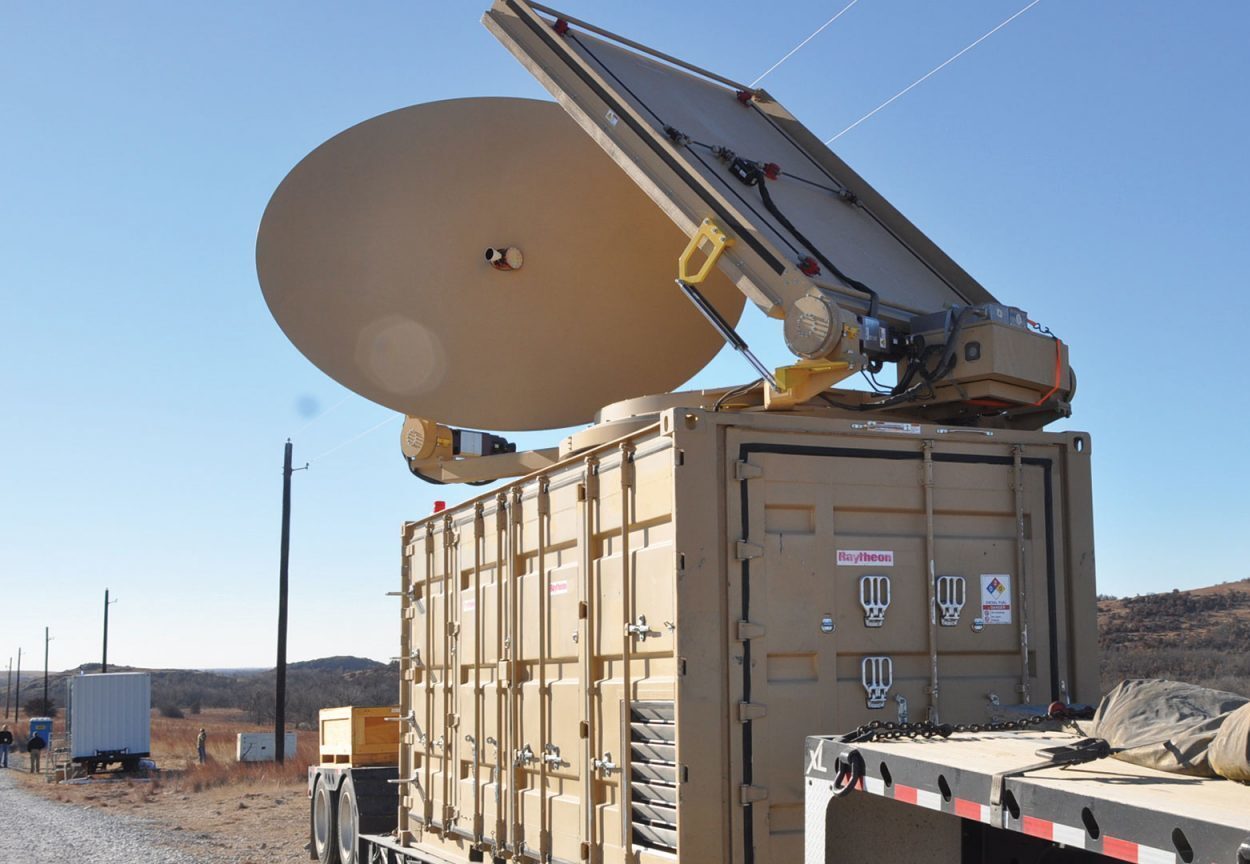
When it comes to HPM technology, the ability to interdict enemy systems becomes a lot more effective, yet introduces major risks for friendly forces. HPM systems tend to fire more indiscriminately compared to a focused HEL, which means that in a CAS scenario, friendly forces will also feel the effect. Both the attackers and the defending unit would suffer the consequences, with both sides losing their electronic equipment, vehicles, and drones. In CAS, HPM systems can then only be limited to firing at the enemy in an attacking or defending direct fire engagement where friendly units are behind the CAS unit. HPMs also have limited range since the microwaves diminish as the range increases, limiting effectiveness and potentially requiring multiple shots.
With these severe limitations, do DEWs have advantages over traditional CAS tools like missiles, rockets, and cannon fire? HEL systems can be highly precise once the stability problem is solved, and the indiscriminate fire of an HPM can neutralize many enemy systems at once. Furthermore, the cost per shot for these systems is generally far lower than legacy systems, even with the large energy output. The cost would be equivalent to the electricity used, which increases the magazine depth far more than conventional munitions.
Currently, the practical applications of DEWs in CAS are largely confined to the realm of cUAS. The significant hurdles related to power, platform stability, and tactical integration could prevent DEWs from replacing the raw kinetic power of cannons and missiles in the near term. For a CAS asset to successfully neutralize an enemy position and make it out of combat alive, a Hellfire missile is still superior to a DEW system.
However, viewing this limitation as a failure does not capture the future potential of DEWs. The cUAS mission could become a platform for future advancements in DEW technology. It allows the Army to field, test, and refine these systems in a lower-risk environment, solving fundamental engineering challenges like beam control and thermal management on operational platforms for HELs. The HPM fratricide challenge could also lead to protection advancements on shielding friendly systems properly to address this risk, additionally offering better protection from an enemy HPM system.
It may be beneficial to the Army to continue to pursue advancements with directed energy, especially as our adversaries also attempt to leverage this technology. With drone proliferation, U.S. troops will be increasingly threatened by the increased mass in projectiles. Figuring out innovative ways to use DEWs beyond cUAS could offer multi-layered defense to troops on the ground. Getting to the point where armored vehicles can be destroyed efficiently with a low-cost microwave burst over an expensive anti-tank missile could be highly beneficial for magazine depth. Even leveraging ways to use DEWs for offensive strikes could be a path forward, but first, the issues with these systems have to be mitigated, especially if we hope to replace legacy systems and tactics.
Sources:
Department of Defense Directed Energy Weapons: Background and Issues for Congress
Directed-Energy Laser Devices: Advantages and Challenges
Science & Tech Spotlight: Directed Energy Weapons
Directed energy weapon system points toward the future of warfare
DIRECTED ENERGY WEAPONS DOD: Should Focus on Transition Planning
The Science Behind Microwave Weapons: Harnessing Electromagnetic Energy
Defense Primer: Directed-Energy Weapons
 If you enjoyed this post, check out the T2COM G-2’s Operational Environment Enterprise web page, brimming with authoritative information on the Operational Environment and how our adversaries fight.
About the Author: Kunal Chauhan is a T2COM G-2 analyst on the Mad Scientist Initiative team. He previously interned with the U.S. Army War College, where he researched Indian foreign policy history and interviewed former Indian military officials to help predict future Indian foreign policy. Mr. Chauhan graduated from William & Mary in May 2026 with a BA in International Relations and a minor in Economics.
Disclaimer: The views expressed in this blog post do not necessarily reflect those of the U.S. Department of Defense, Department of the Army, or the Transformation and Training Command (T2COM).